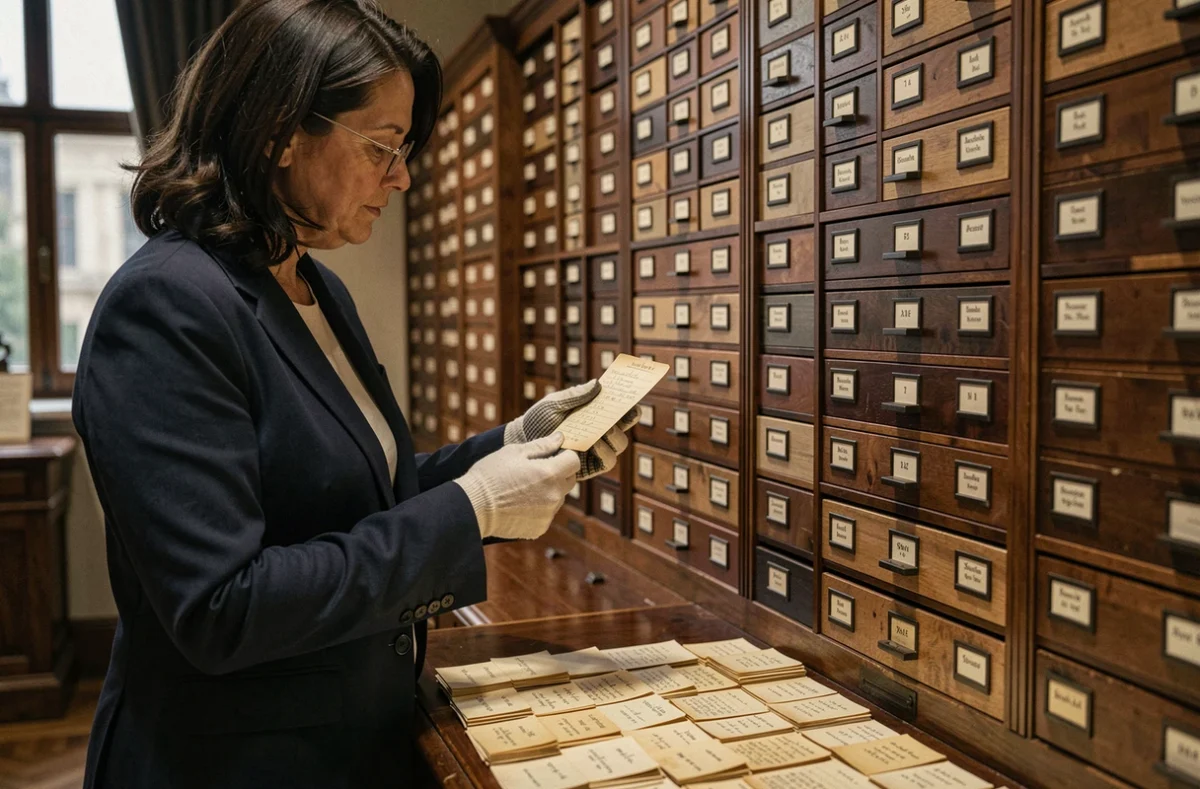
The records in the Louvre’s online catalogue contain a field most visitors overlook: the means by which an object entered the collections. Revolutionary seizure, war booty, diplomatic cession, purchase, bequest—each term points to a specific acquisition process. Cross-referencing these entries with the departments concerned makes it possible to reconstruct the geography of French military campaigns from the Ancien Régime onward.
Means of acquisition and inventory numbers: tracing an artwork’s provenance at the Louvre
Each museum object is assigned an inventory number whose prefix indicates its original collection. The series INV (general inventory), MR (Musée Royal), MNR (Musées Nationaux Récupération) and RF (République Française, acquisitions after 1848) are more than simple administrative codes. They indicate the legal and historical circumstances in which an object entered the collection.
An MNR number, for example, identifies an artwork recovered in Germany after 1945 and entrusted to the national museums pending restitution. An INV number dating from before 1815 may correspond to an object seized during the Revolutionary or Napoleonic Wars.
Inventory registers held at the National Archives cover the period from 1686 to 1995. Some inventories were never transferred by the museums, which means that an unsuccessful search of the digital database does not prove that no documented provenance exists.
By consulting the Louvre’s inventory records, you can spot recurring phrases in the “historical background” field: “revolutionary seizure,” “dispatch by the Commission of Sciences and Arts,” and “Treaty of Tolentino.” These entries provide a thread to follow on a themed tour through the galleries.
Revolutionary seizures and Napoleonic campaigns in the collections
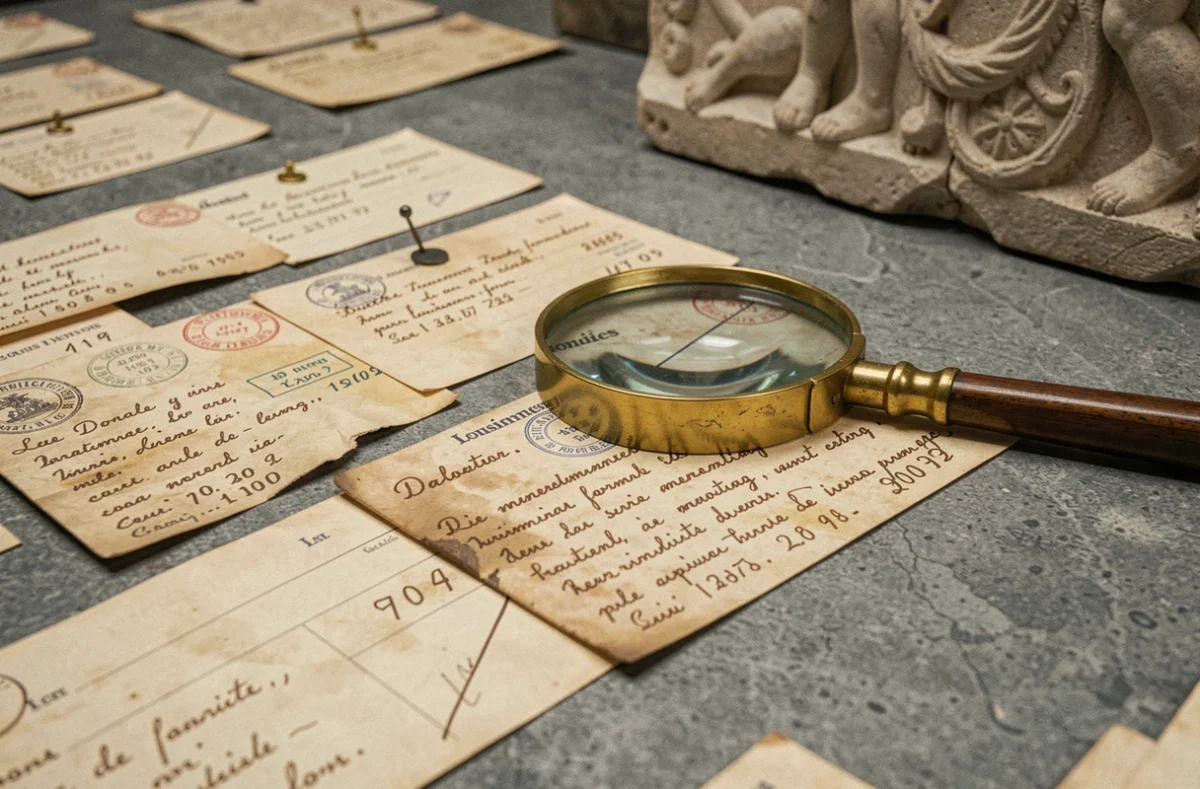
The period from 1794 to 1815 saw the largest influx of artworks acquired through military campaigns. Commissions established first by the Convention and then by the Directory accompanied the armies in Belgium, Italy, Egypt and Germany. Their mandate was to select works for the Central Museum of the Arts, the future Louvre.
The Treaty of Tolentino (1797) formalized the Holy See’s cession of paintings and ancient sculptures. The corresponding records explicitly cite the treaty. After Waterloo, some of these works were returned, but not all—the inventory records reflect this complexity, distinguishing between works that were returned and those that remained.
Several fields are useful for tracing these histories in the database:
- The “historical background” field notes the acquisition context (campaign, treaty, commission)
- The “previous ownership” field traces successive owners before an object entered the museum
- The “comments” field sometimes specifies the terms of restitution or retention in the collections
The online database lists more than 500,000 works. Filtering by department (Egyptian Antiquities, Paintings, Sculptures) and then by acquisition period helps narrow down groups of works associated with a particular campaign.
MNR artworks and the Second World War: a separate inventory
Works bearing the MNR designation are subject to a separate legal regime. They are not part of the national collections: the state holds them in custody but does not own them. This distinction is crucial to understanding why these records contain particularly detailed provenance information.
Research into works lost during wartime, covering the period from 1870 to 1945, informed these records. The aim is not merely museological: it is to identify the rightful claimants and pursue restitution.
French law provides for each restitution request to be examined on a case-by-case basis. An MNR record does not determine whether an object was legitimately acquired—it documents its history. Each case is reviewed individually.
Provenance of artworks at the Louvre: what the records don’t tell you
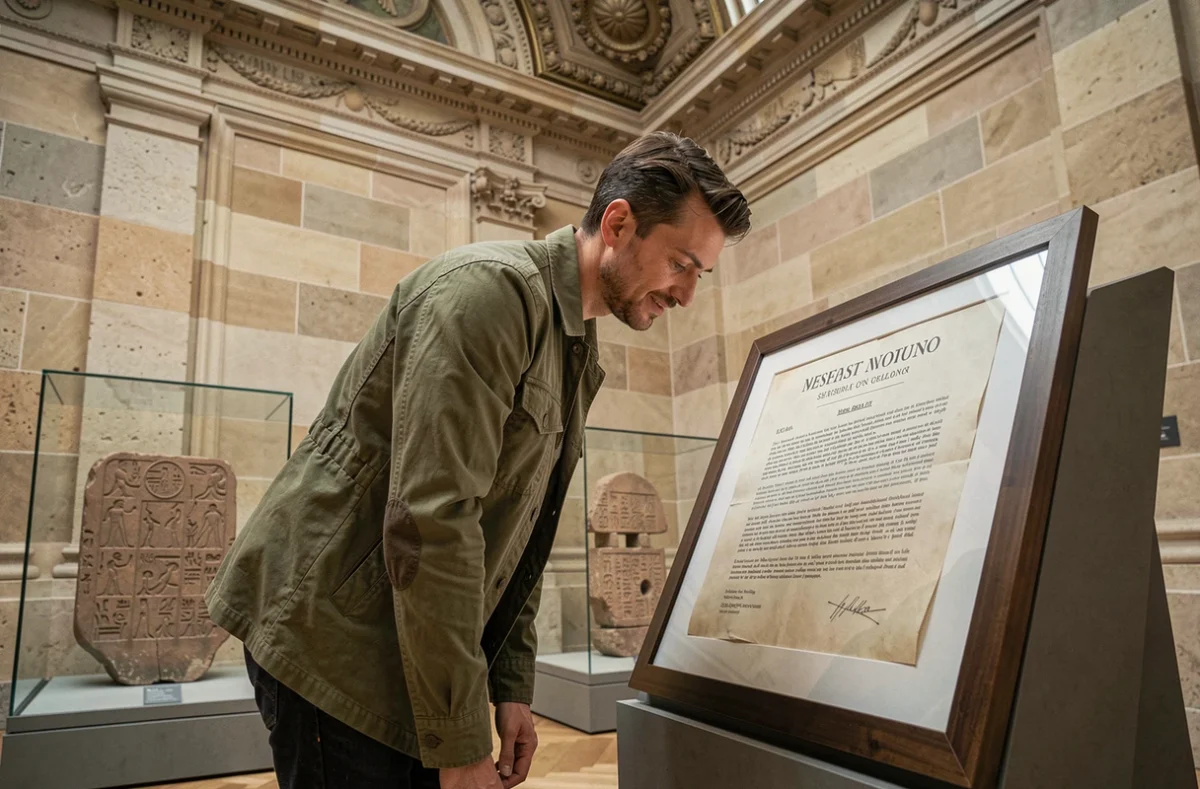
Not every acquisition connected to a military context is labeled “war booty.” Some works acquired through purchase or donation came from collections assembled during colonial conquests and later dispersed on the art market. The inventory record documents the most recent legal transfer, not necessarily the full chain of ownership.
This documentary limitation helps explain why provenance has become a subject of public debate that extends beyond museums. The registers shed light on how objects were acquired, but they are not enough to resolve questions of legitimacy raised by countries of origin.
Several types of provenance history coexist in the collections:
- Direct seizures documented by an official record (treaty, decree, commission report)
- Art-market acquisitions with incomplete information about their earlier provenance
- Donations and bequests from private collectors who themselves acquired works in a colonial or post-conflict context
- Loans from other institutions, with provenance histories documented to varying degrees
We find that the level of detail in an inventory record varies considerably from one department to another. The Egyptian Antiquities and Near Eastern Antiquities departments often have gaps in records dating from before the 19th century, whereas the Paintings department has more continuous registers dating back to Louis XIV.
Browsing the Louvre’s collections database with this perspective turns a museum visit into a documentary investigation. Every inventory number and provenance entry points to a specific episode in French military and diplomatic history—provided you know how to decode the records’ administrative terminology.