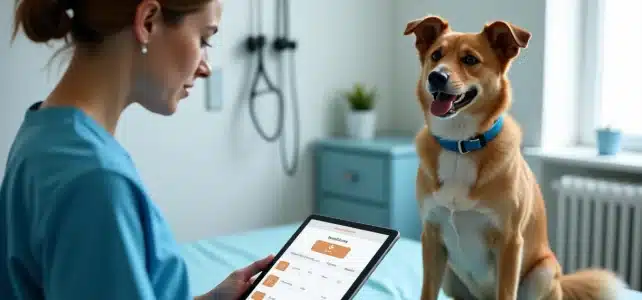
Veterinarians juggle daily between consultations, surgeries, and administrative management. This frantic pace requires optimal organization to provide the best possible care for animals while maintaining personal balance. Fortunately, innovative tools come to their rescue to maximize their efficiency.
Appointment management applications, electronic medical record software, and internal communication platforms have become essential. These solutions not only save time but also reduce stress and improve the quality of veterinary services. It’s important to closely examine these technologies to understand their positive impact on the profession.
Innovative tools to optimize time management in veterinary clinics
Veterinarians must juggle a multitude of daily tasks: consultations, surgeries, medical record management, and communication with pet owners. To meet these demands, innovative tools have been developed, allowing them to optimize work time and focus on what matters most: patient care.
Appointment management applications
Appointment management applications like Gmvet 1 provide a comprehensive solution for organizing consultations, reminding about appointments, and managing cancellations. They also allow synchronization of veterinarians’ schedules with those of pet owners, thus reducing the risk of double bookings.
Electronic medical record software
Electronic medical record software centralizes all relevant information about patients: diagnostic results, treatment plans, surgery and consultation reports. These tools facilitate quick access to data, thereby improving clinical decision-making. They allow for the delegation of certain administrative tasks to the team, freeing up time for higher-value activities.
Internal communication platforms
Internal communication platforms optimize coordination within the veterinary team. They enable the sharing of major information in real-time, assigning tasks, and tracking their progress. Smooth communication among team members is essential for effective management of routine tasks, such as placing IV catheters, performing X-rays, and administering treatments like insulin.
- Gmvet 1: complete appointment management
- Medical record software: quick and centralized access to data
- Communication platforms: coordination and real-time information sharing
The adoption of these innovative tools allows veterinarians to better manage their time, reduce stress related to administrative tasks, and improve the quality of care provided to animals.
Comparison of the best time management solutions for veterinarians
Time management applications
Time management applications, such as Trello and MyLifeOrganized, offer robust features for tracking and organizing daily tasks. These tools allow for the creation of customized dashboards, setting priorities, and tracking progress in real-time. Using a time management application helps to better organize and maintain a smooth workflow.
Work time software
Work time software is essential for optimizing planning and resource allocation. These tools allow for tracking the time spent on each task, identifying bottlenecks, and optimizing overall efficiency. They often offer reporting features, enabling detailed performance analysis.
Teleconsultation solutions
With the rise of telemedicine, solutions like Zoom have become indispensable tools. They facilitate remote consultations, thus reducing the need for travel and optimizing consultation time. Veterinarians can provide continuous care while gaining flexibility.
Comparison table of tools
| Tool | Main features | Advantages |
|---|---|---|
| Trello | Dashboards, task tracking, prioritization | Customized organization, real-time tracking |
| MyLifeOrganized | Task management, planning, reminders | Improved efficiency, priority management |
| Zoom | Teleconsultation, screen sharing, recording | Flexibility, reduced travel |
The adoption of these solutions allows veterinarians to better manage their time, reduce stress related to administrative tasks, and improve the quality of care provided to animals.