Transforming an interior doesn’t necessarily require a large budget or heavy renovations. A few targeted choices in furniture, materials, and lighting are enough to give character to a room. Here are ten concrete ideas for modern and original decoration, designed to create a space that evolves with your needs.
1. Glass block partition to separate without closing off
Have you noticed how a solid wall cuts off the light in a room? Glass blocks are making a strong comeback because they solve this problem. They visually separate two spaces (like a home office and a living room, for example) while allowing natural light to flow through.
This solution is particularly suitable for small homes where every square meter counts. Unlike a wooden screen, glass blocks require almost no maintenance and resist moisture well, making them suitable for use between an open kitchen and a living room.
2. Modular furniture for a living room that changes function
A sofa that unfolds into a guest bed, an extendable coffee table that becomes a desk: modular furniture transforms a single room into multiple spaces. Professionals now design reversible spaces that can adapt to remote work, hosting a guest, or aging in place.
Instead of buying one piece of furniture for each function, you invest in a piece that serves two or three roles. The living room remains airy during the day and reconfigures in the evening. You will find well-thought-out modular pieces on concept-deco.com for decor, with ranges that integrate into different interior styles.
3. Mineral blue paint on an accent wall
Painting just one wall in a deep shade changes the ambiance of the entire room. Mineral blue is emerging as a key color: neither too cold nor too dark, this hue evokes natural stone and adds depth to a living room or bedroom.
An accent wall works best facing the main light source. Positioned opposite a window, it captures the day’s variations and alters the atmosphere from morning to evening. Limit yourself to one wall to avoid a cave-like effect.
4. Carved wood as a central decorative element
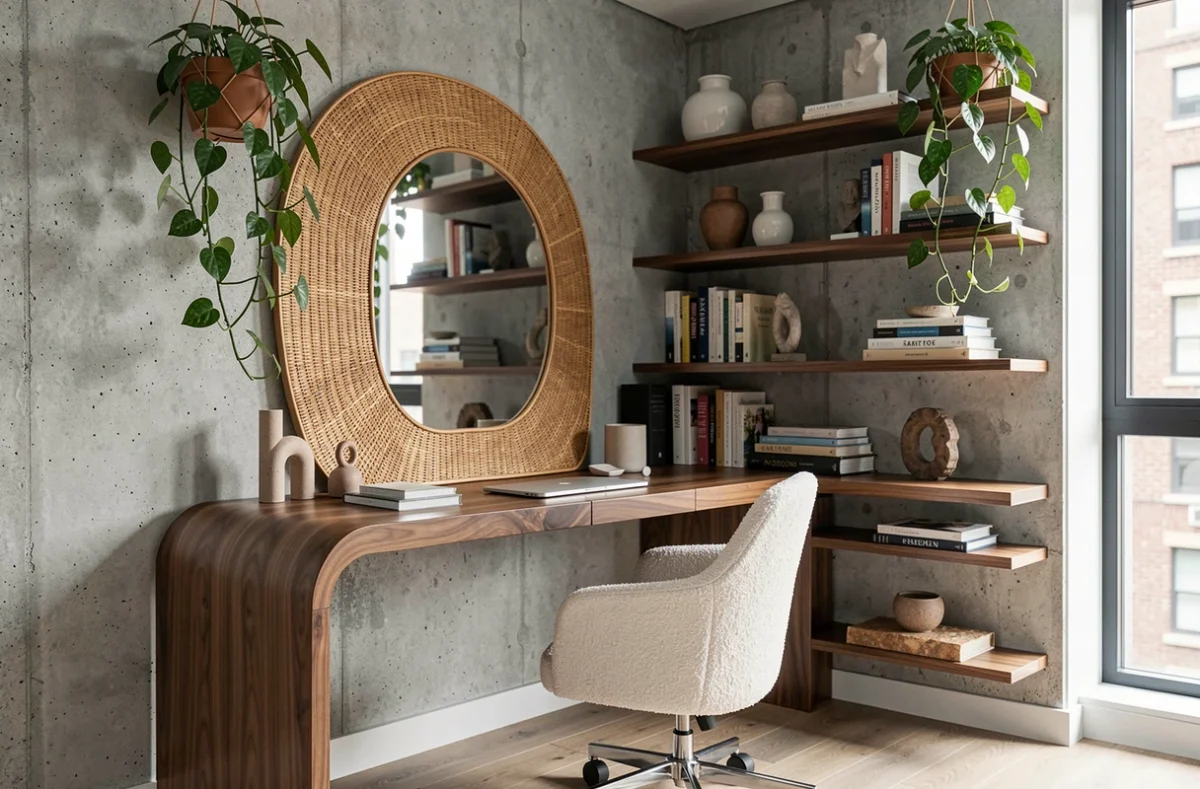
Wood is no longer just a structural material. Worked with a chisel or gouge, it becomes a decorative piece in its own right: a table top with visible grains, a mirror framed in raw wood, a stool carved from a stump.
This type of piece adds a texture that industrial furniture cannot replicate. The practical advantage: a carved wooden object ages well and develops a patina over time, distinguishing it from disposable decorative accessories.
5. Layered natural textiles for a cozy living room
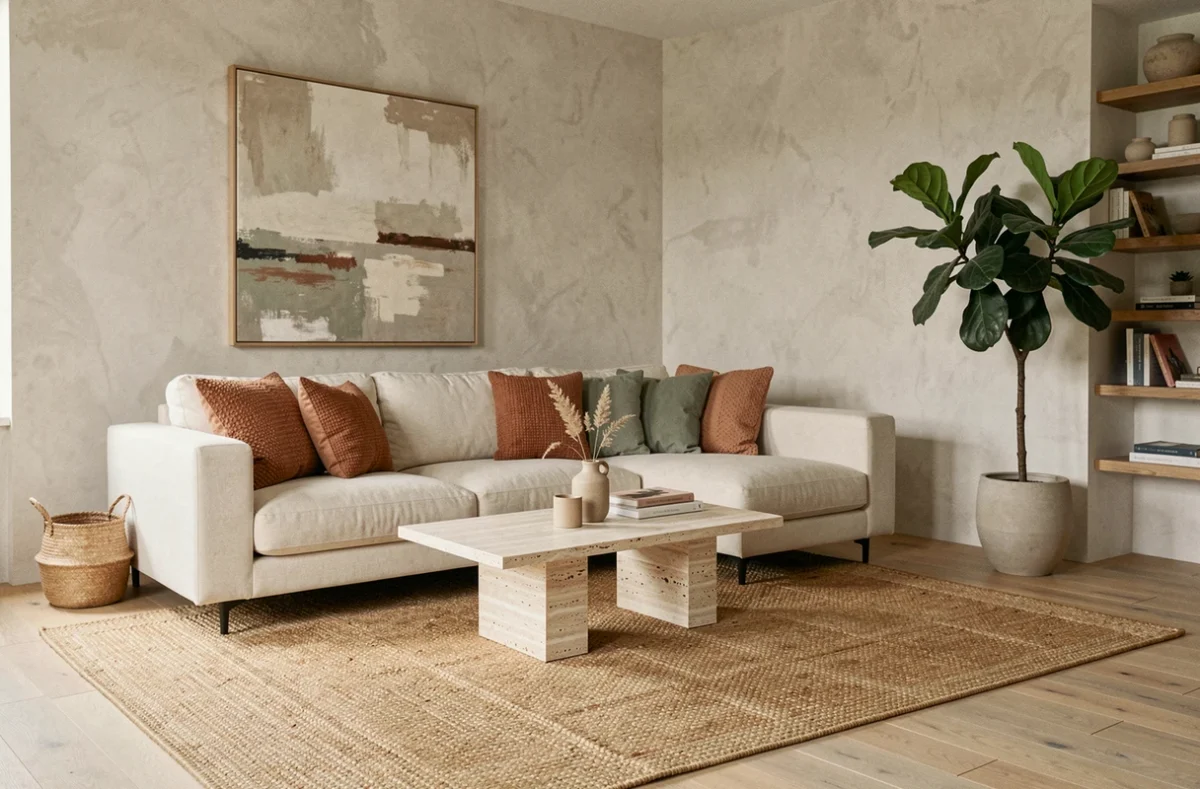
Crumpled linen on the sofa, boucle wool cushions, jute rugs on the floor. Layering natural textiles creates a warm atmosphere without visually overwhelming the space.
Here are some guidelines for successfully mixing:
- Combine contrasting textures (smooth and rough, matte and slightly shiny) rather than different colors
- Keep a palette of two to three tones maximum for visual coherence
- Choose untreated natural fibers, a criterion that is gaining importance with health regulations related to the REACH regulation
6. Sculptural lighting as a focal point
A striking pendant light above the dining table or a geometric floor lamp in a corner of the living room replaces a painting or decorative object. The light fixture becomes the focal point of the room.
Favor a single spectacular piece per space. A graphic chandelier in the living room, a discreet wall sconce in the hallway. Multiplying characterful light fixtures in the same room creates a visual competition effect that can be tiring to the eye.
7. Reusing antique furniture in a contemporary decor
Finding a 1960s sideboard and integrating it into a minimalist living room creates a striking contrast. The antique piece adds personality where standardized new furniture lacks character.
The gap between the declared interest in responsible decoration and actual purchasing practices remains wide. However, reusing antique furniture is the most concrete approach to decorating sustainably. A piece that has survived several decades has already proven its durability.
8. Mirrors positioned facing windows to amplify light
Placing a large mirror opposite a natural light source visually doubles the depth of a room and increases brightness without adding artificial lighting. This technique works in all rooms, from the living room to the entryway.
Why choose this option over additional lighting? A mirror consumes nothing, generates no heat, and visually enlarges the space. Prefer a generous size (at least half the height of the wall) for a real effect.
9. Triangular geometric patterns on furniture
After several years of soft curves and organic shapes, angles are making a comeback. Triangles, cones, and pyramid volumes appear on table legs, shelves, and seating. This graphic vocabulary adds rhythm to an interior without resorting to color.
One geometric piece is enough to create a point of interest. A triangular side table near the sofa or an inverted pyramid-shaped shelf. Paired with straight lines and smooth surfaces, the contrast remains elegant.
10. Digital product passport as a criterion for furniture selection
The European ESPR regulation is gradually imposing requirements for sustainability, reparability, and recyclability for furniture. Specifically, each piece of furniture will come with a digital product passport detailing its composition, estimated lifespan, and repair options.
Anticipating this evolution changes the way you choose furniture. Rather than selecting based solely on appearance and price, you can now:
- Check if the manufacturer communicates about the reparability of their products
- Favor furniture with available spare parts
- Request the exact composition of materials, especially for upholstered furniture that may contain regulated substances
Modern decoration is no longer limited to aesthetic choices. Reversibility of spaces, quality of materials, and longevity of furniture now form a trio that determines the success of an interior. Prioritizing repairable pieces and durable materials remains the most reliable way to create a decor that lasts over time.