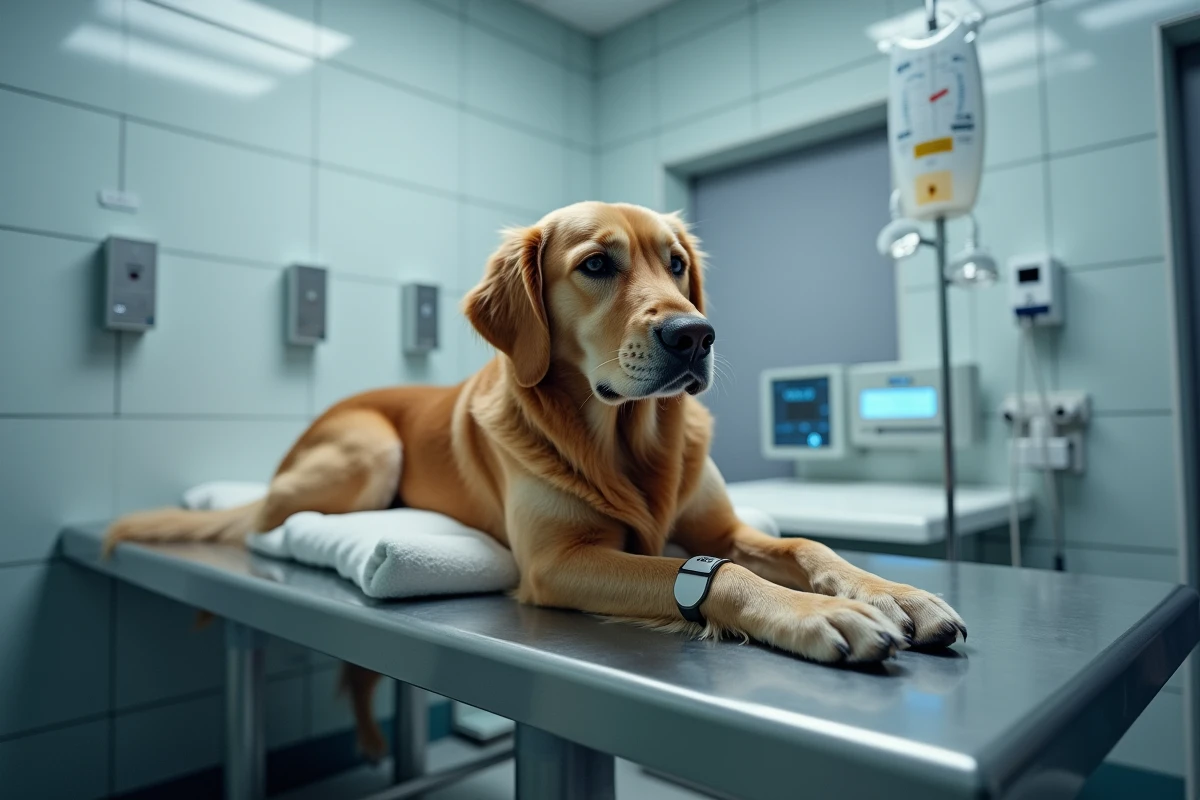
A dog whimpering behind the clinic door, a cat refusing to eat in an unfamiliar cage: the night at the veterinarian often generates more anxiety for the owner than for the animal itself. However, what an animal experiences while hospitalized depends on very concrete factors, from the type of monitoring in place to the layout of the kennel.
Night Monitoring in Veterinary Clinics: What Really Happens Between Rounds
It is often imagined that a caregiver is stationed permanently next to each animal. The reality is more nuanced. Not all clinics offer continuous human presence at night. Many operate with scheduled rounds (every two to four hours) or an on-call system, where the veterinarian intervenes on call from nearby accommodation.
In practice, between two rounds, the animal is alone in its kennel. Vital parameters are checked during each round: temperature, heart rate, infusion rate if necessary. Some facilities have surveillance cameras that allow for the detection of abnormal agitation from a distance.
To find out how a night at the veterinarian goes on Espace Animaux, there is a useful description of the reception conditions and the typical process. The difference between a general clinic and a specialized emergency center often lies in this level of nighttime presence: emergency centers generally employ staff on-site all night, while a neighborhood clinic more frequently operates on an on-call basis.
Before entrusting your pet, ask the question directly: who will be present that night, and how often are checks performed? The answer will give you a much more reliable idea than any general promise.
Stress and Sensory Isolation: What a Hospitalized Dog or Cat Perceives
The medical aspect is rarely the most challenging for an animal on the road to recovery. It is the sensory environment of the clinic that generates the most stress. Smells of disinfectant, noises from compressors or monitors, artificial light, the presence of other unknown animals: everything is different from home.
Dogs and Cats Do Not React the Same Way
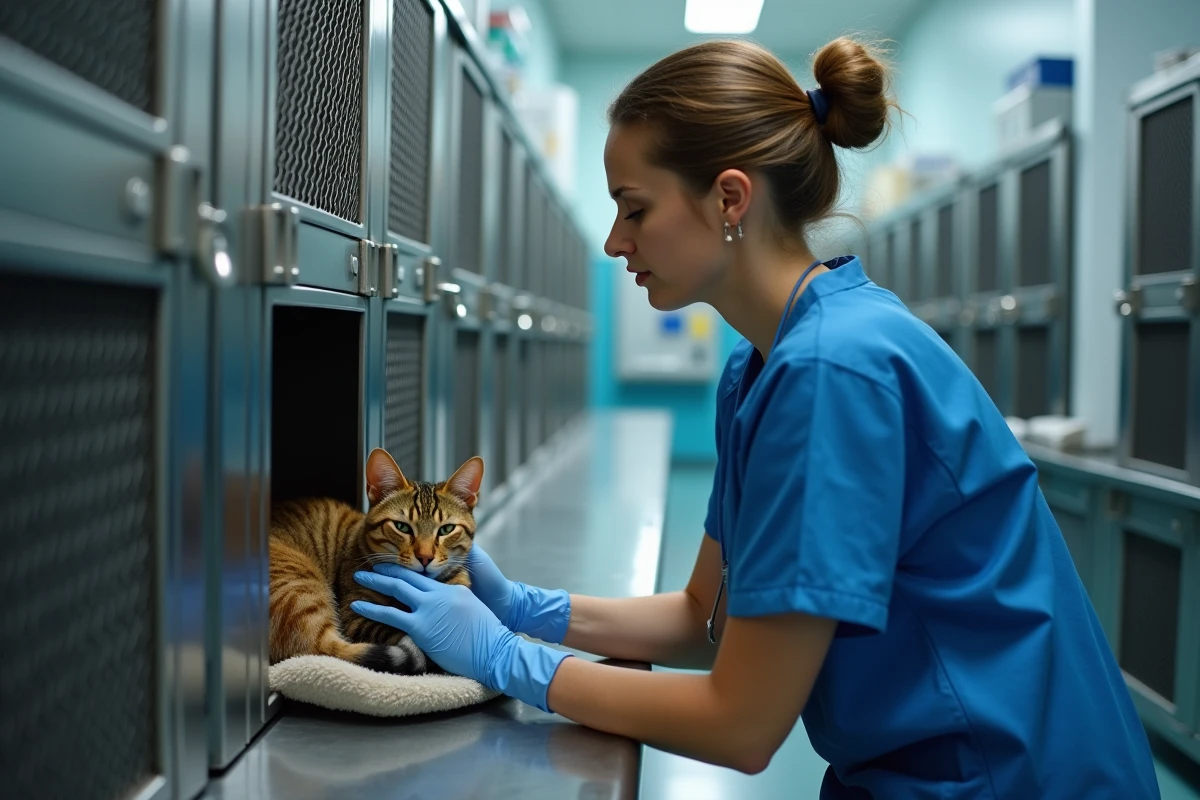
A dog will tend to vocalize, seek attention, and sometimes refuse to lie down. Stress manifests as panting, trembling, or continuous agitation. A cat, on the other hand, often withdraws into itself: it stops eating, remains motionless at the back of the cage, and may give the impression of being worse off than it actually is.
Clinics that take this factor into account offer some concrete adjustments:
- A fabric or clothing item from the owner placed in the kennel to retain a familiar scent, which measurably reduces anxiety in both cats and dogs.
- A physical separation between dog and cat kennels, or even a dedicated room for felines, to limit stressful visual and auditory interactions.
- Dimming or turning off lights at night, along with reducing ambient noise after the clinic closes.
The absence of familiar landmarks remains the primary factor of discomfort, more so than post-operative pain itself in most cases. If your pet is particularly anxious, inform the team: some clinics agree to place a calming pheromone diffuser near the kennel.
Post-Surgery Night or Observation Night: Two Very Different Experiences
The term “hospitalization” encompasses situations that are completely different from the animal’s perspective. A post-surgical night involves pain management, anesthetic recovery, and invasive care. An observation night after an episode of vomiting often consists of an infusion and regular checks.
The Post-Operative Case
After a procedure, the animal goes through a recovery phase that can last several hours. The disorientation related to anesthesia adds to the stress of the environment. The pain management protocol (injection of anti-inflammatories, opioids depending on the surgery) is calibrated to cover this period, but feedback varies on this point: some animals show signs of discomfort despite treatment, while others sleep deeply.
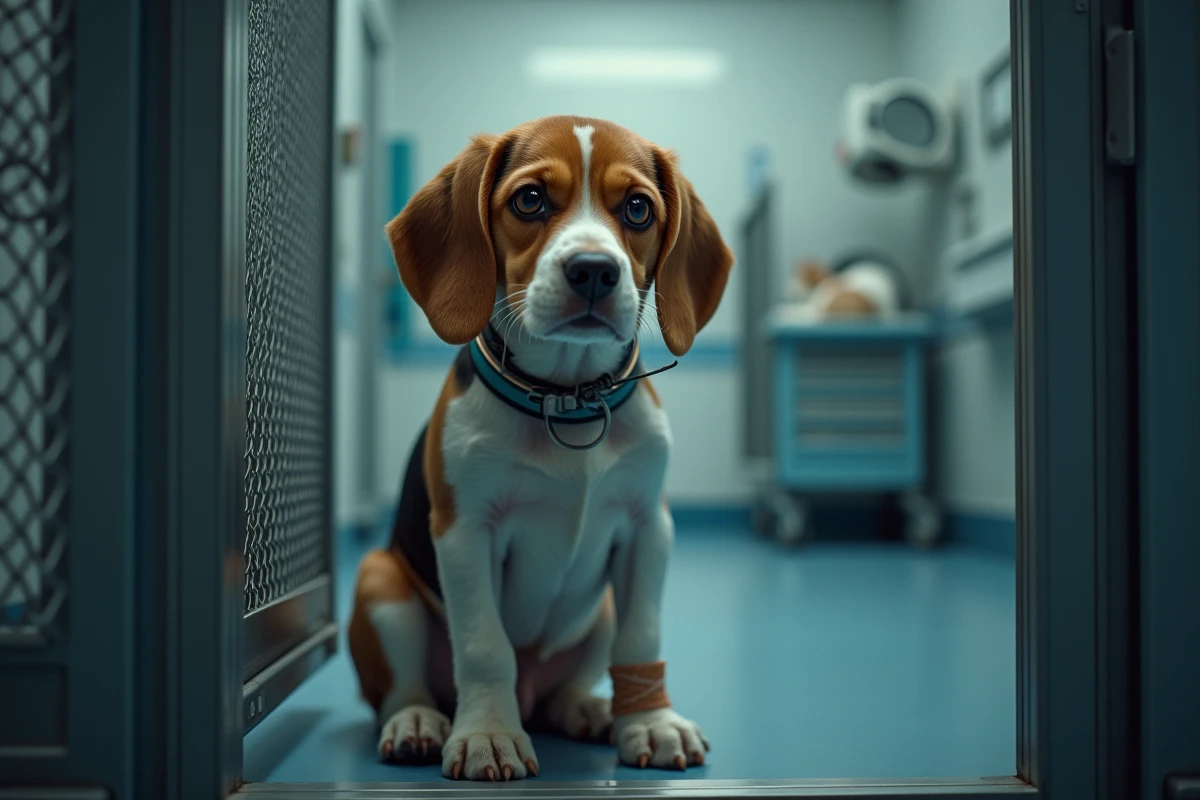
The team also monitors the surgical site, the resumption of urination, and the condition of the collar if it has been placed. A dog struggling with its collar in a confined space can injure itself or tear stitches, hence the importance of a kennel suited to its size.
Simple Observation
For a monitoring hospitalization (dehydration, mild intoxication, ongoing blood tests), the night resembles more of an uncomfortable stay than a medical ordeal. The animal is infused, fed if its condition allows, and checked at regular intervals. The main challenge is then to limit the duration of the stay to the strict necessary.
Hospitalized Exotic Pets: Rabbits, Ferrets, or Reptiles, Often Underestimated Specific Needs
New pets pose an additional problem: their metabolism and thermal needs are not those of a dog or cat. A hospitalized rabbit that stops eating for a few hours can develop gastrointestinal stasis, an emergency in itself. A reptile placed in a standard ambient temperature kennel sees its metabolism slow down to the point of skewing biological results.
Not all clinics have equipment suitable for exotic pets (heating lamps, ventilated kennels, specific diets). If your pet is a ferret, parrot, or bearded dragon, check before hospitalization that the clinic has a dedicated exotic pet area. If not, request a transfer to a specialized facility, even if it involves a longer journey.
Preparing for the Night at the Veterinarian: Actions That Change the Stay
A few simple actions can significantly reduce the animal’s stress and facilitate the work of the caregiving team:
- Bring a fabric imbued with your scent (pillowcase, worn t-shirt) and ask that it be placed in the kennel.
- Provide written information about eating habits, known fears (noises, handling), and ongoing treatments.
- Ask for the time and method of communication for updates: some clinics call in the morning, others send a text after each round.
- Report any history of stress in a veterinary setting (attempted escape, aggression, prostration) so that the team can adapt its care.
The discharge from hospitalization also deserves special attention. An animal returning home after a night in the clinic may appear apathetic or, conversely, overly excited for a few hours. Give it a calm space, avoid excessive solicitations, and monitor its food intake in the first few hours.
What makes the difference between a difficult night and a manageable night, for both the animal and the owner, rarely relates to the medical act. It is the quality of the environment, the regularity of monitoring, and communication with the team that determine the actual experience of this hospitalization.