
Redirecting mail to the correct address in France relies on two distinct mechanisms: postal forwarding, which physically reroutes the mail, and updating the files with each sender. Confusing the two can lead to lost documents, delays on registered mail, or missed tax deadlines. Understanding what happens at each step allows you to choose the right solution according to your situation.
Postal forwarding and address change: two systems, two limitations
The most common pitfall is believing that subscribing to a forwarding service with La Poste is enough to resolve everything. In reality, forwarding does not update the senders’ files. Your bank, your insurer, the tax office, or the CAF continue to send their mail to the old address. La Poste intercepts and redirects them, but this transfer is temporary.
In contrast, the official online address change service allows you to notify several organizations from a single online process. This service does not cover all senders: mutual insurance companies, energy suppliers, or press subscriptions often need to be notified one by one.
| System | Function | Duration | Main Limitation |
|---|---|---|---|
| La Poste Forwarding (permanent) | Redirects mail to the new address | Several months | Does not update senders’ files |
| La Poste Forwarding (temporary) | Transfer to a temporary location or mail holding | Variable, renewable | Additional delay on mail |
| Online Address Change Service | Notifies several administrations in one process | One-time | Does not cover all organizations |
| Individual Notification | Direct update with each sender | Permanently | Requires time and careful follow-up |
To delve deeper into good postal forwarding practices, you can learn more on Les Bricoleries de Nanie, which details the concrete steps of this process.
Mail forwarding times: what La Poste really announces
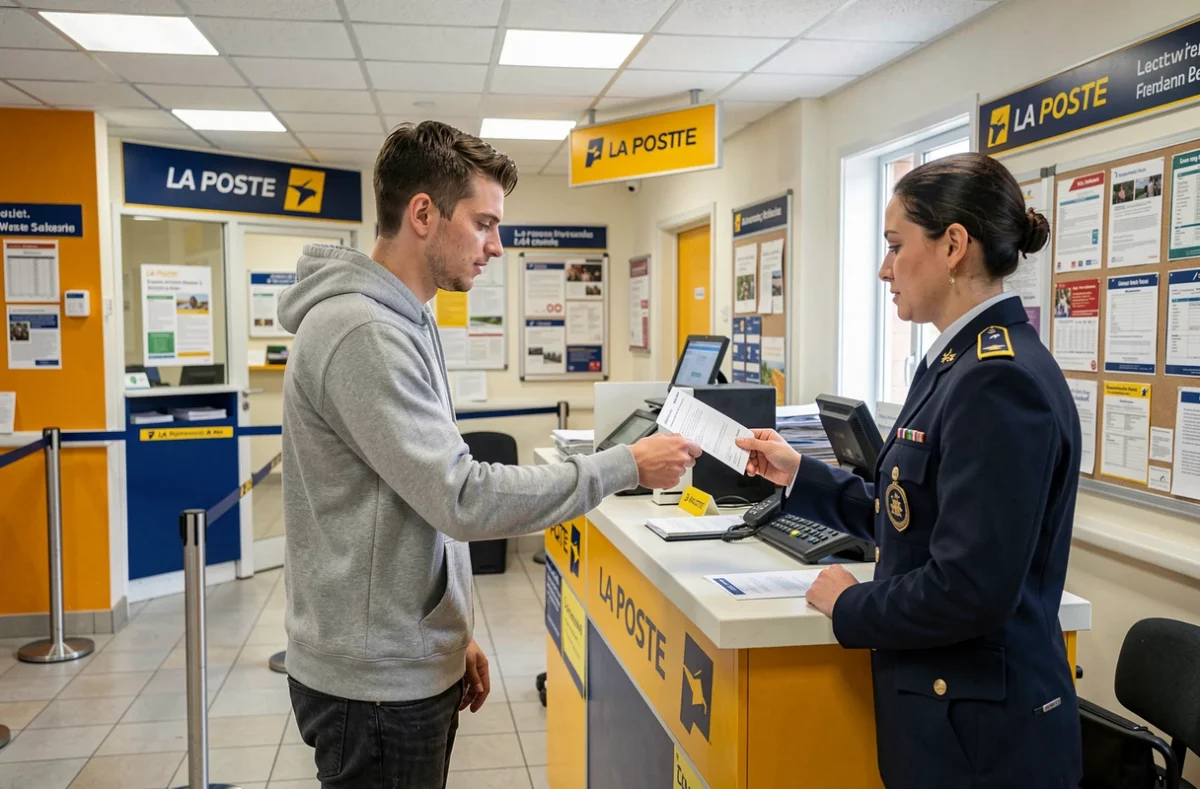
La Poste indicates a guideline time of 1 to 3 days for France and overseas between the receipt of mail at the old address and its forwarding. This time is added to the normal delivery time. Mail that usually takes two days to arrive may therefore take up to five days during the forwarding period.
For documents subject to a deadline, this delay poses a real problem. A court summons, a tax notice, or a registered letter with acknowledgment of receipt may sometimes arrive after the response deadline. Forwarding does not guarantee receipt within legal deadlines.
Registered mail and administrative acts
A forwarded registered letter undergoes the same extended journey as a regular letter. If the recipient is absent during the second delivery attempt at the new address, the item is returned to the post office in the new municipality, not the old one. This point is often overlooked and complicates mail retrieval.
For tax documents or summonses, the most reliable strategy remains to report the address change directly to the concerned organization even before subscribing to the forwarding service.
Writing the postal address: errors that cause return to sender
Beyond forwarding, a significant portion of misrouted mail results from an incomplete or incorrectly formatted address. La Poste’s optical sorting machines read the address from bottom to top. The postal code and municipality must appear on the last line, in uppercase, without punctuation.
- The apartment number, building, staircase, and floor are location supplements to be placed on a dedicated line, before the street line. In new residences or subdivisions, their absence frequently leads to a return.
- The name of the residence or building is added as a supplement, especially in municipalities where several streets have similar names. A “Résidence Les Cèdres” distinguishes two identical addresses on the same street.
- The mailbox must bear a readable name that matches the recipient. Mail addressed to a name not present on the mailbox may be returned by the postman as “unknown recipient.”
French postal standards for addressing
The address is structured over a maximum of six lines. Line 1 contains the recipient’s identity, line 2 any supplement (department, “c/o Mr. X”), line 3 building or residence information, line 4 the street number and name, line 5 a locality or special mention, and line 6 the postal code followed by the municipality.
Each line must not exceed 38 characters according to postal standards. An address that is too long is truncated by sorting machines, which can direct the mail to the wrong distribution center.

Mail management in temporary situations: holding or forwarding
Temporary forwarding and mail holding address different situations. In the case of vacation or business travel, temporary forwarding redirects mail to the place of stay. Holding, on the other hand, keeps the mail at the post office until the recipient returns.
One contract covers the entire household, regardless of the number of beneficiaries added. This simplifies management for families or shared accommodations, but requires that all names on the mailboxes be declared in the contract.
A processing time of a few working days after subscription should be anticipated. Anticipating the subscription before departure avoids a window during which mail arrives at the usual address without anyone to receive it.
The choice between permanent forwarding, temporary forwarding, or holding depends less on budget than on the nature of the expected mail. For regular mail, holding is sufficient. For documents with deadlines, direct notification to senders remains the only reliable method, with forwarding serving only as a safety net during the transition.