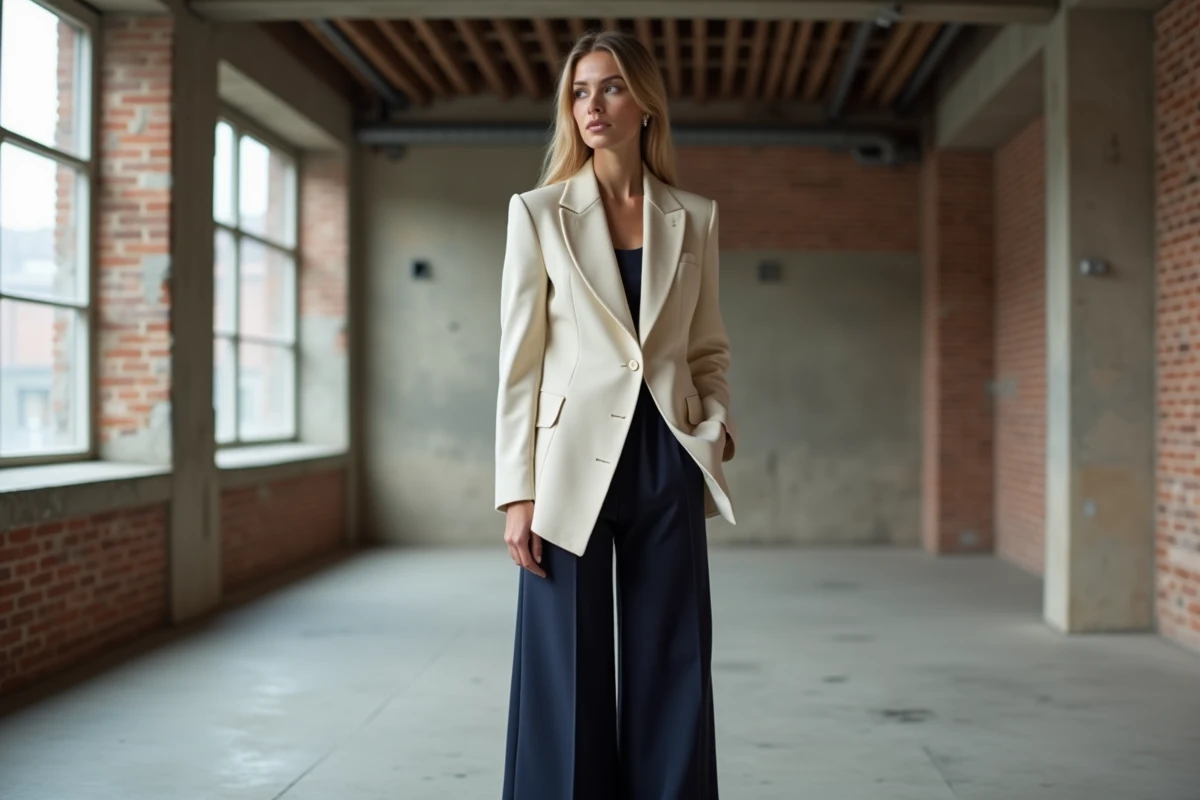
Lille has concentrated for several years an organized fashion ecosystem centered around the incubator Maisons de Mode, which selects and supports young brands in the long term. The 48-hour format, condensed over a weekend, transforms this support mechanism into a public event where emerging creators and visitors meet in an unusual setting for fashion. What does this short format reveal about the actual structuring of the brands on display, and how does it differ from other French fashion events?
Direct-to-consumer creators and phygital logic: what the Lille selection filters
The profile of the brands supported by Maisons de Mode has significantly evolved. The latest cohorts show a clear increase in brands structured as direct-to-consumer, which operate through drops, pre-orders, and online sales. For these creators, the 48H is not a classic B2B trade show but a rare physical touchpoint with their community.
This phygital logic changes the very nature of the event. Visitors do not discover collections frozen on racks, but brands that test in real-time the reception of a piece, adjust a color, or validate a limited series based on feedback from the weekend. The short format acts as a real-life test for the commercial structuring of young labels.
The entire program and the selected brands are visible on 48hmaisonsdemode.com, which details each creator and their journey within the incubator.
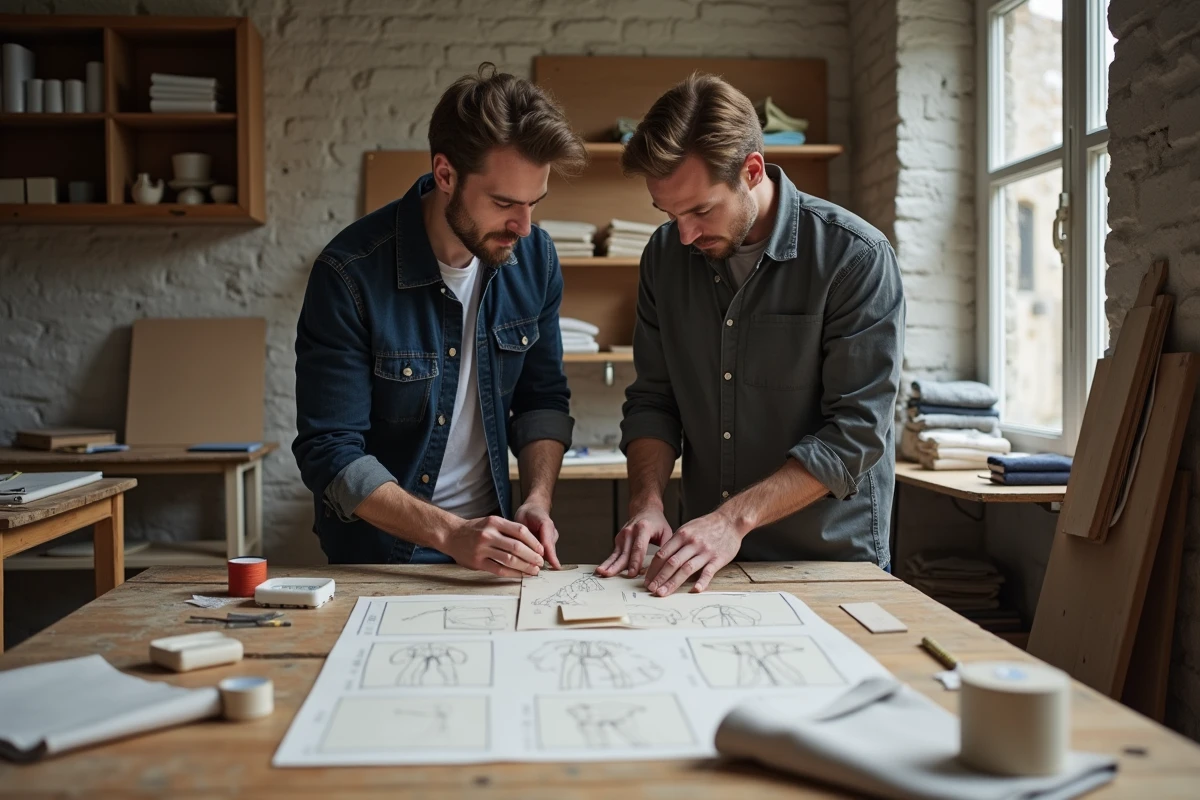
Eco-responsible criteria and slow fashion: the Lille filter
For several years, Maisons de Mode has integrated eco-responsible criteria into the support of its brands: upcycling, short circuits, sourcing of local or recycled materials. This orientation is part of the dynamic of the Fashion Green Hub, based in Roubaix, which structures the sustainable textile sector in Hauts-de-France.
Lille combines eco-responsible selection and long-term support. The brands are not simply showcased for a weekend; they benefit in advance from workshops and ongoing development support, which is not available in most public fashion events.
Emerging talent pathways between Lille and Roubaix: the geography of a textile incubator
Maisons de Mode distributes its creators between two locations: Faubourg des Postes in Lille and Avenue Jean Lebas in Roubaix. This territorial network is not anecdotal. The workshop boutiques located in these popular neighborhoods contribute to a strategy of urban revitalization led by the European Metropolis of Lille.
During the 48H, this geography becomes a visiting route. The visitor discovers production spaces and observes manufacturing methods. This immersive format produces a concrete effect:
- The public sees the real conditions of creation, not a showroom staging
- The creators receive direct feedback on pieces still in development
- The neighborhoods benefit from an influx of visitors that exceeds the usual fashion circle
In over ten years of existence, more than a hundred young creators have passed through this structure, some of whom have subsequently developed their brand on a national scale.
International connections and talent spotting: what the weekend triggers after the 48 hours
The 48H also serves as a showcase for international networks. Maisons de Mode has established links with foreign support structures, allowing some Lille talents to be spotted for residencies or showrooms outside France. Conversely, emerging creators from other countries are sometimes welcomed during the weekend.
This international dimension remains modest compared to Paris fashion weeks, but it plays a specific role. The 48H serves as a first filter for international visibility for brands that do not yet have the means to present themselves in Paris. The cost of a Paris showroom during fashion week represents an investment that the majority of young labels cannot afford.
Lille offers a structured alternative, with a mixed audience (professionals and the general public) and support that does not stop at the closing of the doors.
Brands from this ecosystem generally advocate for creative and responsible fashion, positioned in the slow fashion segment. This positioning directly stems from the selection criteria of the incubator and the influence of the regional Fashion Green Hub.
The 48-hour format, due to its brevity, forces each creator to concentrate their message. Where a multi-day trade show dilutes attention, the Lille weekend compresses the meeting between the public and emerging designers into a time short enough for every stand, every workshop, every exchange to count.